Samhain (pronounced SAH-win) is the Celtic fire festival that marks the start of the dark half of the year, celebrated around October 31. It is the night when the veil between the living and the dead is said to thin, and one of the four great fire festivals on the Wheel of the Year. And if you have been saying SAM-hane, you are in good company.
What is Samhain

Samhain is the third of the year's three harvest festivals, falling between the autumn equinox and the winter solstice. In the northern hemisphere it lands around October 31, while in the southern hemisphere it falls in early May, the start of the dark half of the year there too, but in spring. The word comes from Old Irish and means "summer's end." For us, it is the most contemplative sabbat on the calendar, a moment to honor the dead, mark the turning of the wheel, and sit with what is passing.
The Samhain bonfire
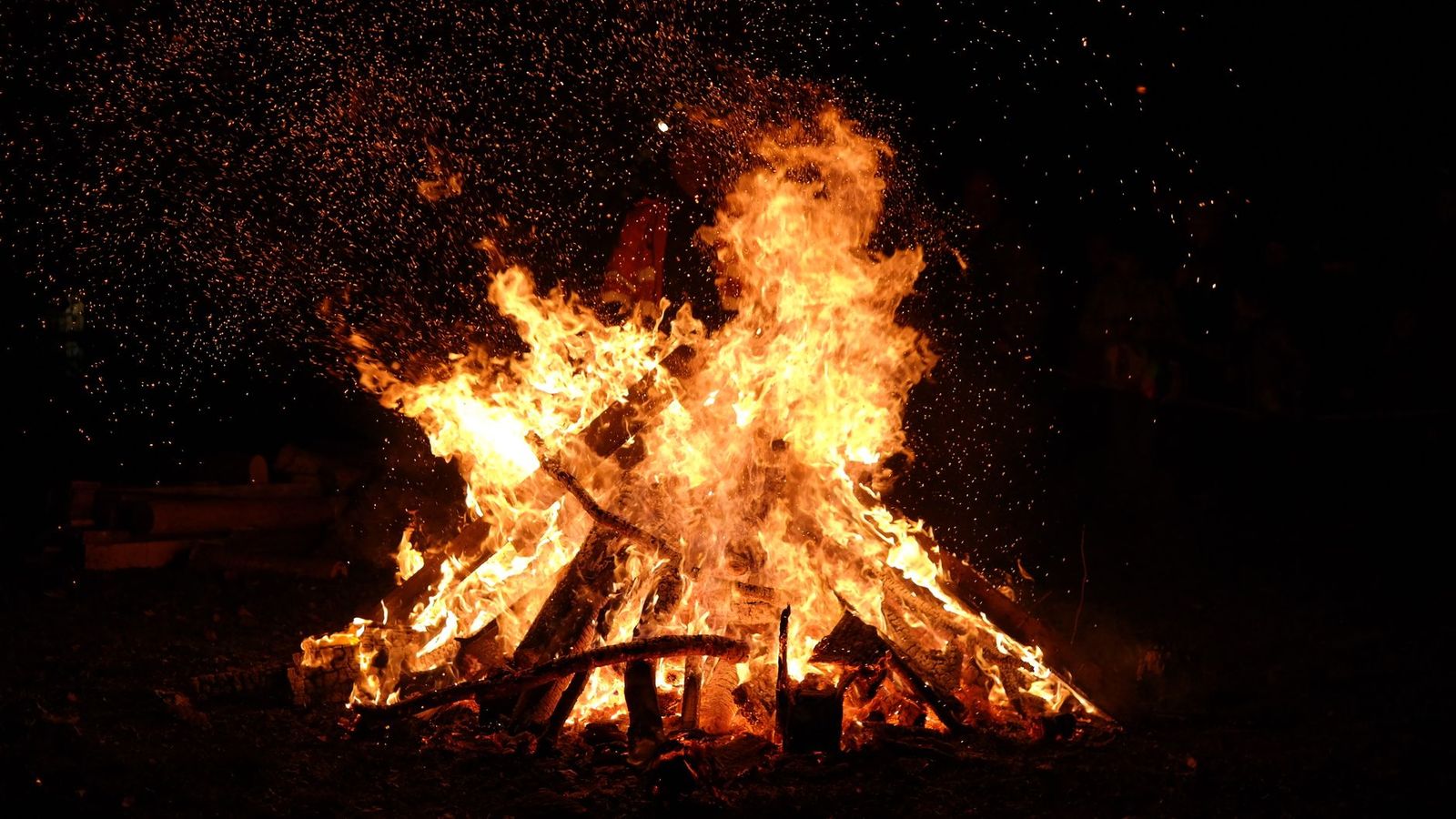
A bonfire is the heart of the Samhain celebration. In the old Celtic tradition, families extinguished their hearth fires and relit them from a single communal blaze, a ritual of renewal and protection. We light ours in a fireproof bowl on the balcony, with dried oak, rosemary, and a handful of mugwort for smoke. If you can, gather friends around a real fire in a field. Speak the names of those you have lost, then let the flames carry the words. The fire is not decoration. It is the altar.
The Samhain color palette

We dress our Samhain spaces in bone cream, rust, dried-blood red, deep plum, and anthracite. These are the colors of late October: the last apples, the turned leaves, the soil going cold, the smoke of a wood fire. Bone cream reads as candlelight on parchment. Rust is the color of fallen oak leaves. Dried-blood red belongs to rowan berries and pomegranate seeds. Deep plum is the sky just after sunset. Anthracite is the night itself. We avoid bright orange, the supermarket Halloween palette, because it flattens the season into plastic.
The Samhain altar

A Samhain altar is a working surface, not a display. We lay a black cloth first, then a bone cream runner down the middle. On it: a single black candle for the dead, a small cauldron or iron bowl, a dish of salt, a cup of water, and a sprig of dried yarrow. Photographs of ancestors go on the left, fresh apples and pomegranates on the right. A small mirror lies flat, face up, to catch the candlelight. Nothing should be plastic. Nothing should be new. The altar should look as if it has always been there.
The dumb supper
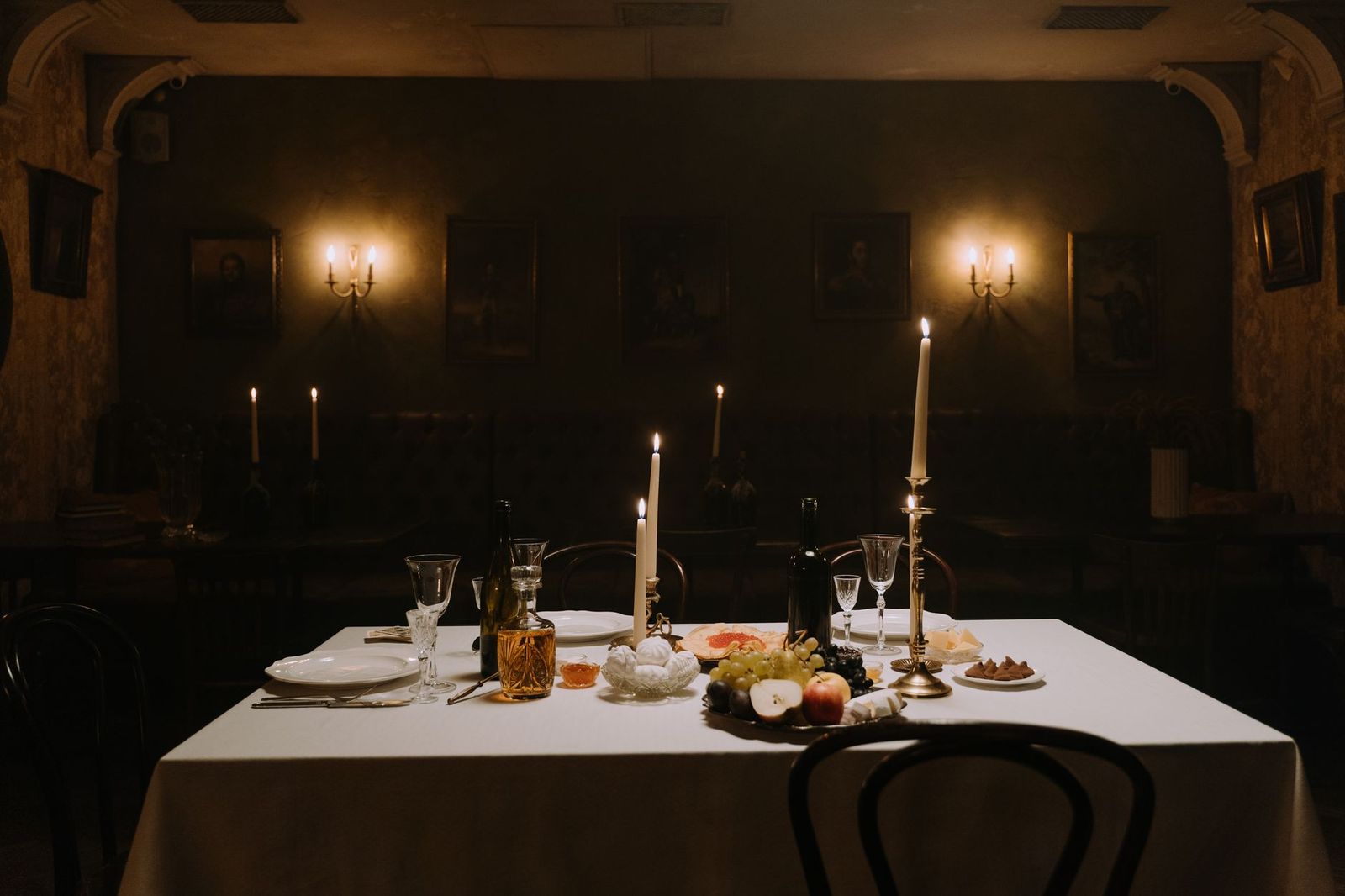
The dumb supper, sometimes called the silent supper, is a meal shared with the dead. Set a table for the living, then add one empty place, often at the head, with a candle, a glass of wine, and a plate of food no one will eat. From the moment the first dish is served, no one speaks. We eat in silence, thinking of the person we have invited. At the end, the untouched plate is left overnight, then buried or left at a crossroads at dawn. It is the oldest practice on this list, and the one we return to every year.
Samhain divination

Samhain is the night for divination, because the veil is thin and the future feels closer than usual. The simplest method is apple peel reading: peel an apple in one long ribbon, throw it over your left shoulder, and read the shape it lands in as the first letter of a name. We also pour molten lead or wax into cold water through a key, then interpret the silhouette. Scrying with a black mirror, set on the altar, works well too. Keep a notebook beside you. The images come fast, and you will want to remember them in the morning.
Samhain feast foods

The Samhain table is the last harvest table of the year. We cook with what is still in the garden: late pumpkins, root vegetables, the last apples, walnuts, and quinces. A slow-roasted shoulder of pork or a vegetarian pot of butter beans and smoked paprika both work. Bread is broken by hand, not cut. Cider is mulled with clove and star anise. Pomegranate seeds go on everything, partly for taste, partly because Persephone ate them. Leave a small plate of bread and salt on the altar for the ancestors before you sit down to eat.
The jack-o'-lantern

The original jack-o'-lantern was a carved turnip, not a pumpkin. In Ireland and Scotland, families hollowed out a swede or a large beet, cut a face into it, and set a candle inside to ward off wandering spirits. Pumpkins arrived later, with the Irish diaspora in North America, where the bigger fruit was easier to carve. We keep both traditions: a small turnip on the altar, a pumpkin on the doorstep. The face should look serious, not comic. A grim lantern is a guardian. A grinning one is decoration.
Honoring ancestors

Samhain is the night to set out photographs of the dead. We print small portraits, frame them in bone cream, and lean them against the altar candles. Names are spoken aloud, slowly, one at a time. If you do not know your biological line, honor the dead who shaped you anyway: a teacher, a friend, the woman who taught your grandmother to cook. A glass of wine is poured for each name and left on the altar until morning. This is not grief. It is the practice of keeping the line unbroken.
A silent night walk

After the dumb supper, after the fire has burned down, we walk. Alone, in the dark, for twenty minutes, without a phone and without a torch. The point is to feel the year turning. Listen for what you cannot see. Notice what your body does when it cannot rely on sight. In the southern hemisphere, the same walk happens in early May, under spring stars, and the feeling is different: lighter, greener, but still a threshold. When you come home, write three sentences about what you noticed. That is your Samhain record for the year.
FAQ
When is Samhain celebrated?
In the northern hemisphere, Samhain falls around October 31. In the southern hemisphere, it is celebrated in early May, at the start of the dark half of the year there.
Do I need to be Wiccan to celebrate Samhain?
No. Samhain predates modern Wicca by centuries. Anyone can mark the turning of the wheel with a fire, a meal, and a moment of silence.
What is the dumb supper?
A silent meal shared with the dead. One place is set and left empty, and no one speaks from the first dish to the last.
Can I celebrate Samhain alone?
Yes. Many of the practices on this list, the altar, the apple peel, the night walk, work beautifully as a solitary ritual.
What should I wear?
Dark, natural fabrics. Black, deep plum, anthracite. Heavy cotton or wool. Avoid bright orange and plastic costumes.
If you want to keep this night on your back past October 31, our Wheel of the Year collection holds the sabbats in print: bone cream and rust inks on black cotton, vintage engraving, the dark feminine line we print in our own studio at Atelier Hecate. Browse the full guide to the Wheel of the Year to plan the next turning.